Home / Venues / New Jersey / The Westmount Country Club
Two ballrooms, mountain views through a wall of windows, and reflective ceilings. Each one changes how the night gets built.
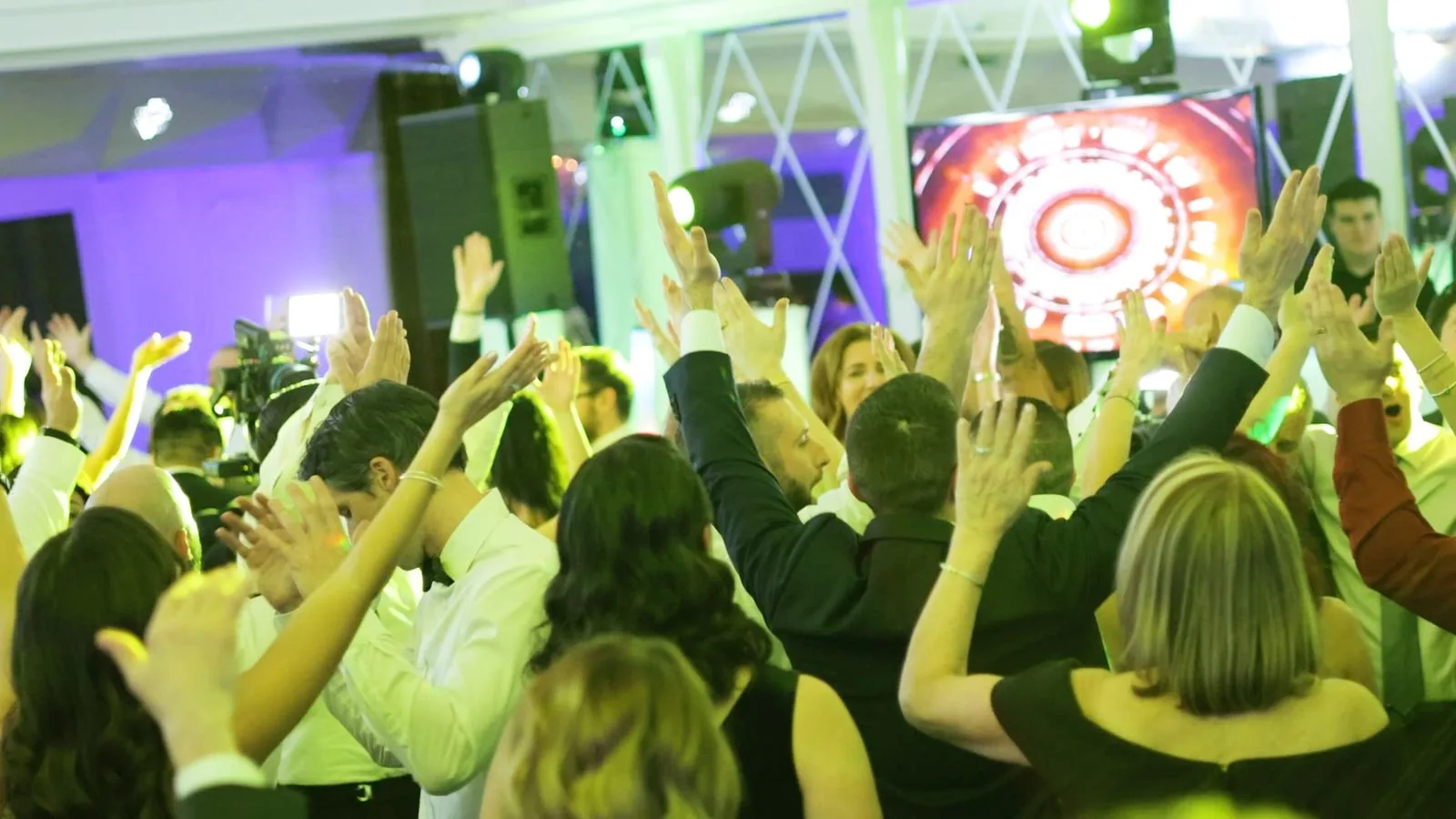
Peak of the night at The Westmount Country Club
Westmount runs two reception rooms — the Grand Ballroom and the Continental Room — and on a Saturday both are usually in use.
That is normal for a club this size, and it quietly matters. Two receptions under one roof means sound has somewhere to go that is not your room. The answer is not to run quietly; it is to aim properly. We orient the system into your room rather than at the shared walls, and we keep the low end controlled, because bass travels through a building's structure far more readily than anything else.
Done right, your floor gets real energy and the room next door never knows you are there. Done carelessly, both parties spend the night bleeding into each other.
Which room you have booked also changes the specification completely. The Continental Room starts at a hundred and twenty-five guests; the Grand Ballroom at two hundred and fifty. Those are different jobs, and we would rather tell you that than sell you the same rig twice.
The Grand Ballroom has massive windows looking out to Garret Mountain. It is the room's best feature and it is the thing that catches lighting plans out.
A room full of daylight at five o'clock is a completely different room at nine. Lighting that looks beautiful in the evening is effectively invisible during a summer cocktail hour, and colour that reads well against darkness can look thin against a bright window.
So we program to your timeline rather than setting one look and leaving it. The room should change as the night does — that is what intelligent lighting is actually for, and it is why we ask what time your ceremony ends before we quote a lighting package.
The Grand Ballroom's ceilings are reflective, which is lovely to look at and unhelpful acoustically. Hard surfaces overhead send sound straight back down into the room, so speech loses definition first and the usual instinct — turn it up — makes it measurably worse.
The fix is coverage rather than volume: sources aimed at guests rather than at surfaces, and levels set so the toast is intelligible at the back without the front tables being hit hard. It is the same principle as any hard room, applied to a ceiling instead of a wall.
Not if both systems are aimed and controlled properly. We orient into your room rather than at the shared walls and keep the low end in check, since bass is what actually travels through a building.
Considerably. The Grand Ballroom's windows make it a different room at five than at nine, so we program the lighting to your timeline rather than setting one look for the whole night.
Yes - it's a room we've worked, so load-in and setup are known quantities rather than something solved on the day.
Send your date and we'll confirm availability, usually the same day. Peak-season Saturdays go furthest ahead.
Also considering somewhere else? These are rooms we work regularly.
“A DJ who understands the assignment.”
Nathan & Nikki TaylorSend your date and we'll confirm availability and what the room actually needs.
Most enquiries answered the same day · no obligation